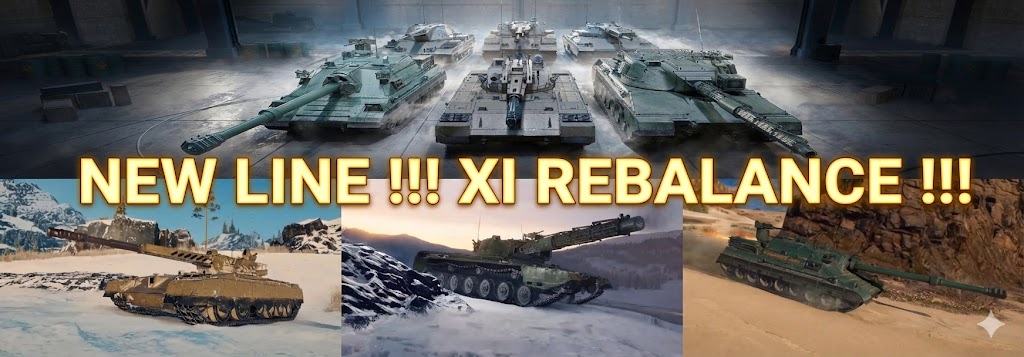
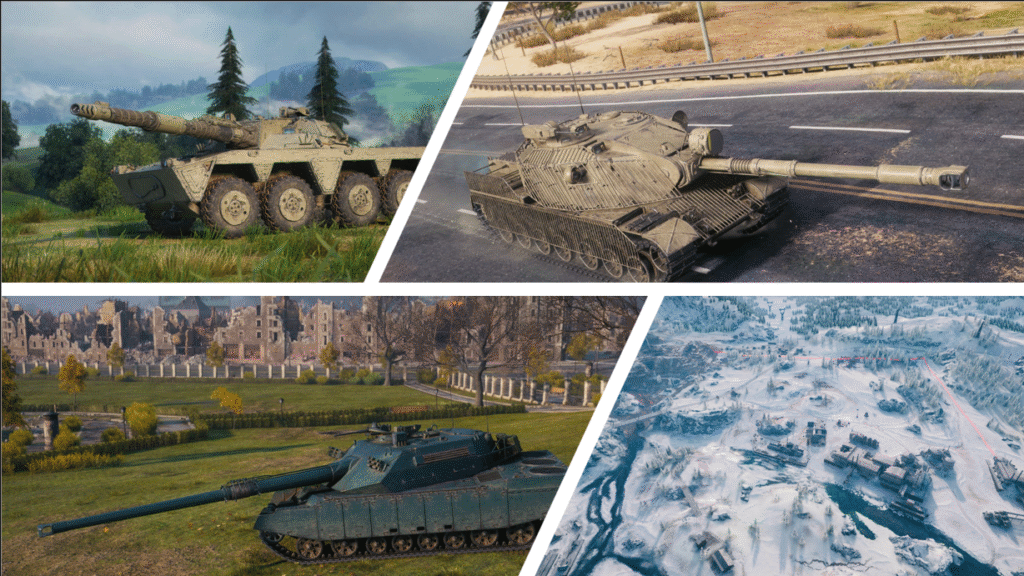
The 2.2.1 update in World of Tanks, coming on April, is far from just another routine patch. On the contrary, Wargaming is doubling down on expanding the top-tier bracket by adding three technologically unique Tier XI machines: the Gorilla, the Fauteur, and the Executor. These exciting additions are accompanied by an unexpected and highly anticipated rebalance of several existing Tier XI vehicles and their Tier X predecessors.
When it comes to the choice of tech tree lines for these new arrivals, the developers have opted for less conventional tanks – a move I believe is a step in the right direction. Right off the bat, Wargaming deserves objective praise for the incredibly detailed and visually stunning models of all three new Tier XI tanks. Let’s dive into the details of what Update 2.2.1 has in store for us.
New Tier XI Tanks
The Gorilla
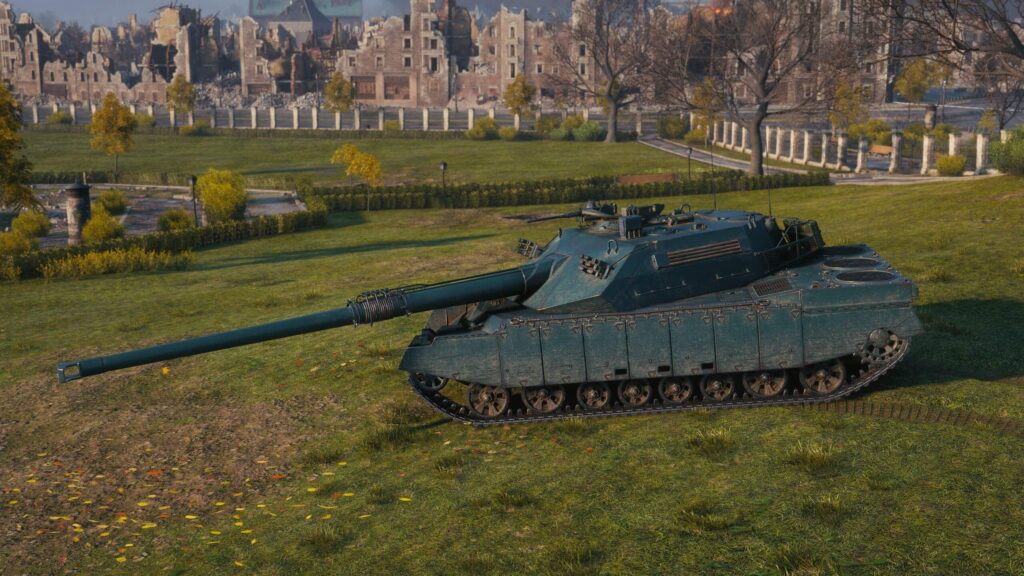
The new American Tank Destroyer line, branching off from the T110E4, introduces the Gorilla at Tier XI. While this beast boasts a rugged, armored turret, its true standout feature is the Multi-Pack Charge System mechanic.
This TD is capable of firing before the gun is fully reloaded, at the cost of lower alpha damage. Based on early footage, it appears you can fire after completing only about one-third of the reload cycle. The big question remain. Will firing early reset the entire reload process? Personally, I hope not.
Either way, the Gorilla will gain a massive advantage when finishing off low-HP targets – a task that is usually a headache for tanks with long reloads. The old tactic of “rushing” American TDs right after they fire will now be an extremely risky gamble for light and medium tanks.
Essentially, the Gorilla features an “inverted” version of the mechanics found on the Obj. 432U or the Hirschkäfer, where players must wait extra time to deal higher damage. In a way, it also adopts the capabilities of the Taschenratte, which can deal damage in regular intervals using its twin small-caliber guns.
Fauteur
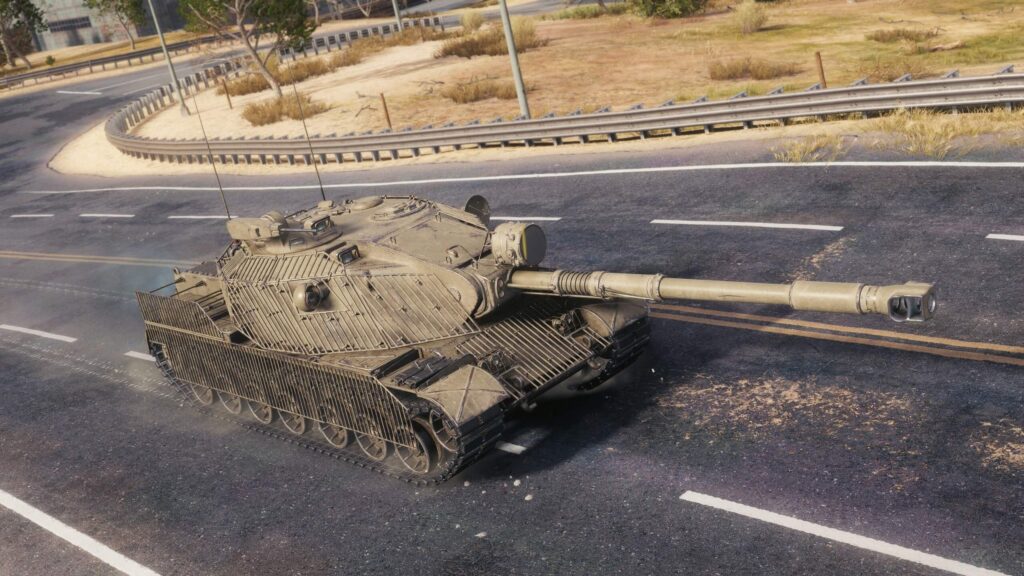
The second branch of French heavy tanks, following the AMX M4 mle. 54 line, has finally received its successor in the form of the Fauteur. This tank introduces the Induction Propellant Afterburner mechanic, which uses electrodes in the gun to progressively increase damage. On its own, the gun offers rather poor base alph. In fact, you’ll essentially be playing at Tier XI with the “stock” gun from the AMX M4 54. However, much like the Hirschkäfer, the alpha damage scales upward over time.
Early footage shows a base value of 470 DMG with posibillity to load it on 600 DMG, but that’s not the ceiling. You can manually override the combustion limit to deliver a massive hit exceeding 650+ HP, though this comes at the cost of drastically worsened gun stabilization and aim time.
Personally, I love the option to manually trigger this extra chargé. It adds an element of unpredictability to every trade. Most importantly, it’s great that this mechanic is fully player-controlled. Unlike automatic systems (such as those on the Taschenratte or Hirschkäfer), the player has absolute control over the Fauteur’s output.
Executor
The British wheeled medium line, branching off from the Concept No. 5, reaches the top of the pyramid with a vehicle called the Executor. Its unique ability, High-Pressure Turbocharger Assist, pushes medium tank mobility toward the level of wheeled light vehicles.
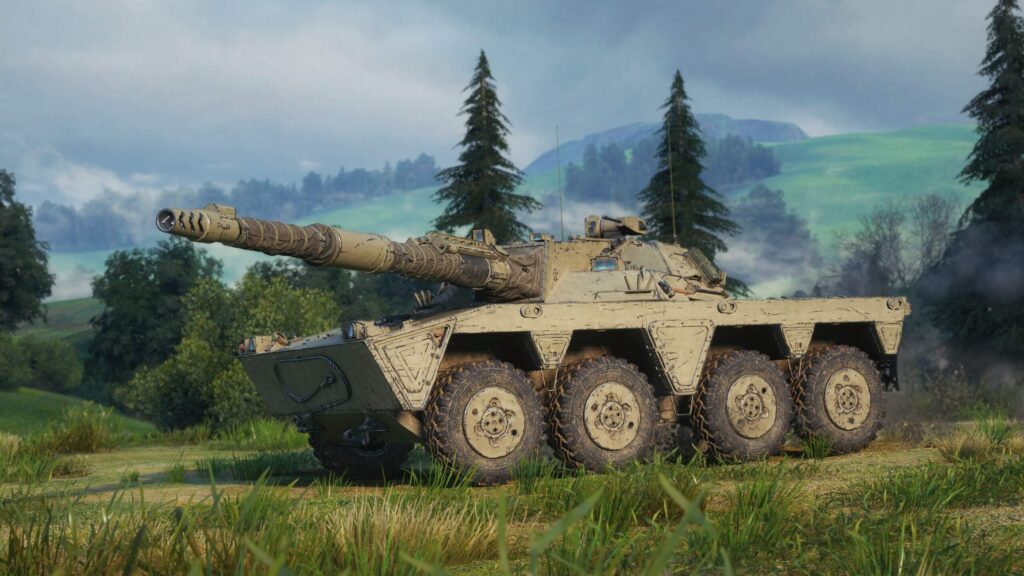
Activating this ability significantly boosts engine power and top speed for a few seconds. For a brief moment, this “turbo” mechanic essentially turns the Executor into an EBR, allowing for hyper-aggressive plays and reaching unconventional positions early in the match.
Deep down, I was hoping that one of the new Tier XIs would follow the Concept 5 line. However, I feel a slight bit of disappointment regarding the somewhat “lazy” implementation of the Executor’s ability. While contributors like QuickyBaby consider it a “healthy” mechanic that won’t break the game balance, I have mixed feelings. On one hand, I agree with him. On the other, I was hoping for a more original mechanic than just another iteration of a turbo boost.
Rebalance
As the tradition in World of Tanks is, changes to the Top of the Tree often bring minor adjustments to their respective lines. Wargaming has decided to honor this tradition by strengthening several vehicles from Tier VIII to XI leading toward the Object 432U, AMX 67 Imbattable, STK-2, and FV4025 Contriver. The newly released official patch notes also mention tweaks to selected premium vehicles. Though I will focus specifically on the Tier XI changes. You can review all other adjustments on the official World of Tanks website.
While the community generally felt the Contriver was strong even before this patch, the buffs to the STK-2 surprised almost no one. Similarly, Wargaming finally answered player demands for a significant buff to the Imbattabl. Even the Tier XI Object 432U received its second set of stat improvements. Because, of course, there is nothing Wargaming wouldn’t do for a Soviet machine…
It is important to note that all Tier XI changes mentioned below account for fully researched Upgrades.
STK-2 (Japanese Heavy Tank)
Despite being in the game for only a short time, this Japanese “long-boy” STK-2 is receiving an upgrade to its gun cooling, which has been its primary weakness. Along with a reinforced hull, its hit points will increase by 100 to a total of 2,500 HP.
The effective armor of the upper glacis plate is being buffed from 216 mm to 249 mm, providing much-needed survivability. Furthermore, post-shot overheating is reduced from 50 % to 46 %, and the total gun cooling time is shortened by 1.4 seconds to 31.9 seconds.
In my opinion, these buffs will not have a massive impact in practice, as the tank will still struggle to hold its own against high-tier premium ammunition. I still find it difficult to understand the logic behind a mechanic where players essentially shoot themselves in the foot by worsening their gun handling with every shot.
This feels especially questionable when compared to the American T803, which actually rewards players for effective firing instead of penalizing them.
FV4025 Contriver (British Heavy Tank)
Some might argue that the Contriver didn’t need a buff at all, but I don’t entirely agree with that sentiment. On the contrary, I believe these improvements are well-chosen. Compared to the nearly impenetrable Taschenratte, the Contriver remains relatively soft from the front. Furthermore, it still possesses a massive weak spot between its tracks which, unlike the vulnerabilities on the Taschenratte, is quite easy to hit.
To address this, the upper plate will now receive 150 mm of hull armor, up from the original 130 mm. Additionally, its hit points will be increased to 2,600, and its top speed will see a boost from 34 km/h to 38 km/h, making it a more viable contender on the battlefield.
AMX 67 Imbattable (French Heavy Tank)
The Imbattable is set to receive higher alpha damage, improved gun handling, and better penetration. These changes could turn this tank into a solid “hammer” in the hands of skilled players, though its lack of armor and high skill ceiling should prevent it from becoming overly OP in random battles.
Significant changes are coming to the gun, which will now deal 450 HP damage with AP and APCR shells, and 550 HP with HE. Penetration is also being buffed, with AP jumping from 268 mm to 275 mm and APCR from 328 mm to 335 mm.
Beyond raw power, the dispersion at 100 m is improving from 0.34 m to 0.32 m, and the aiming time is being reduced by two-tenths of a second to 2.1 seconds. Most importantly for an autoloader, the dispersion after firing has been reduced by 13 %, which is a crucial buff for clipping out effectively. While this autoloader didn’t gain any extra armor thickness, Wargaming did follow the trend of the STK-2 by adding 100 HP, bringing its total to 2,500.
Object 432U (Soviet Medium Tank)
The Object 432U was already decent after the previous buff to its special ability, but following these latest improvements to its armor, reload, and penetration, it is bound to become an absolute monster. Despite those earlier buffs, the tank is almost never seen in public matches, which is likely why Wargaming decided on a second round of improvements.
The reload time is being slashed by a full second to 10.5 seconds, which naturally reduces the time required for the additional heat-up mechanic used to deal higher damage. To help deliver that damage, the penetration for both standard and premium ammo is being increase. APCR penetration rises from 263 mm to 270 mm, while HEAT shells will now punch through 350 mm of armor instead of 340 mm.
This already resilient machine will also appear a bit “redder” in your crosshairs, as the hull armor thickness is being increased from 120 mm to 135 mm. Lastly, the gun’s dispersion during turret traverse will be reduced by 10 %, further cementing its status as a dominant brawler.
Map Changes
Update 2.2.1 doesn’t focus solely on vehicles. Also brings significant overhauls to the battlefields. Despite the wave of new maps on the Supertest, Wargaming has set its sights on three well-known maps, with the clear goal of disrupting established “camping” positions and encouraging more active and dynamic gameplay.
Klondike
With the arrival of Update 2.0, Klondike left the Grand Battles format, but it is now returning to Random Battles in a scaled-down version. To ensure this winter map doesn’t lose its frantic pace, it has been resized from 1400×1400 meters to 1100×1100 meters.
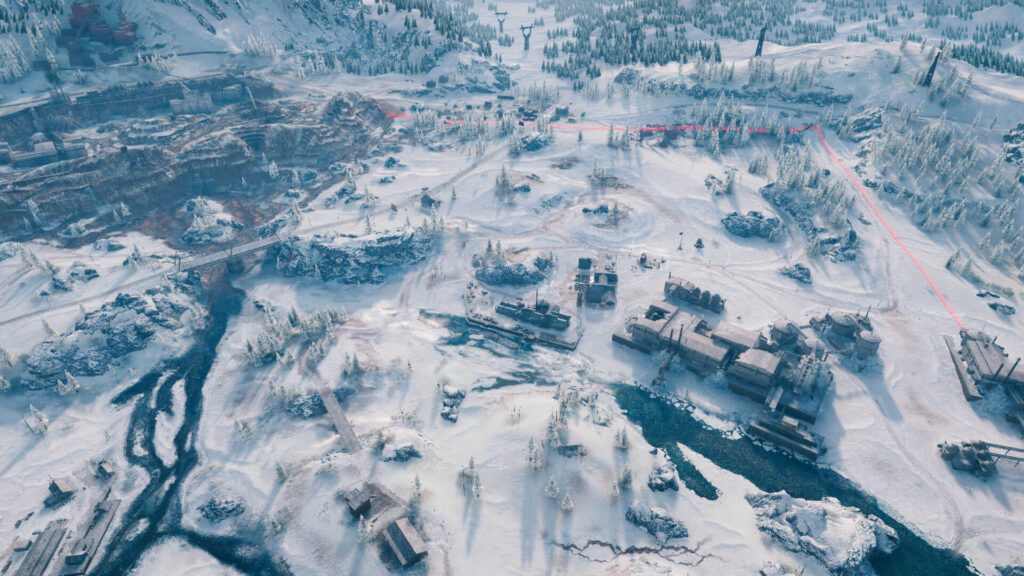
The southern port has undergone a complete redesign, adding more cover and positions that allow heavy tanks to engage in safer brawling. Additionally, the central area is now much more undulating and rich in vegetation, serving as a direct invitation for light and medium tanks to finally take an active role in spotting. Furthermore, new defensive positions for tank destroyers have been added near both bases to provide better support.
Pearl River
The central part of Pearl River has long suffered from overly static gameplay. Wargaming has therefore decided to rework the entire southwestern and central areas to better accommodate mobile vehicles and scouts.
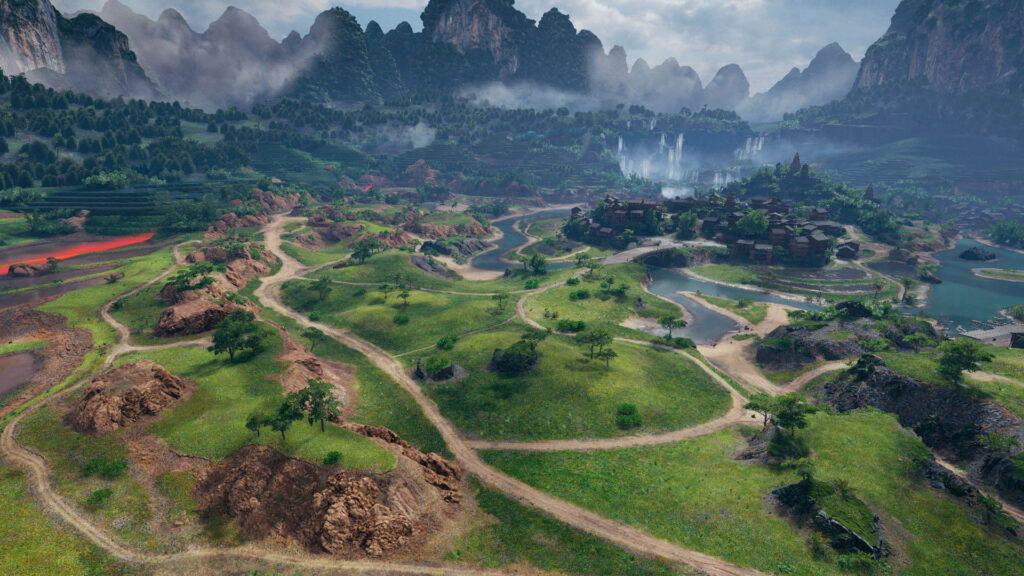
The massive rock on the left side, which previously blocked the view of the center, has been removed. In its place, a new bridge with updated access routes has been constructed, fundamentally changing the flow of engagement in the heart of the map.
The cave has been relocated to sectors F4–G5, ensuring it no longer obstructs key firing lines, while a new hill has been added to provide fairer access for fast vehicles from both teams. The northeastern corridor, typical for heavy tank engagements, has also seen adjustments to cover and travel times.
Serene Coast
The central part of Serene Coast is now dominated by a massive mountain range featuring two railway tunnels that can be used for repositioning. This creates entirely new tactical options for pushing into the center.
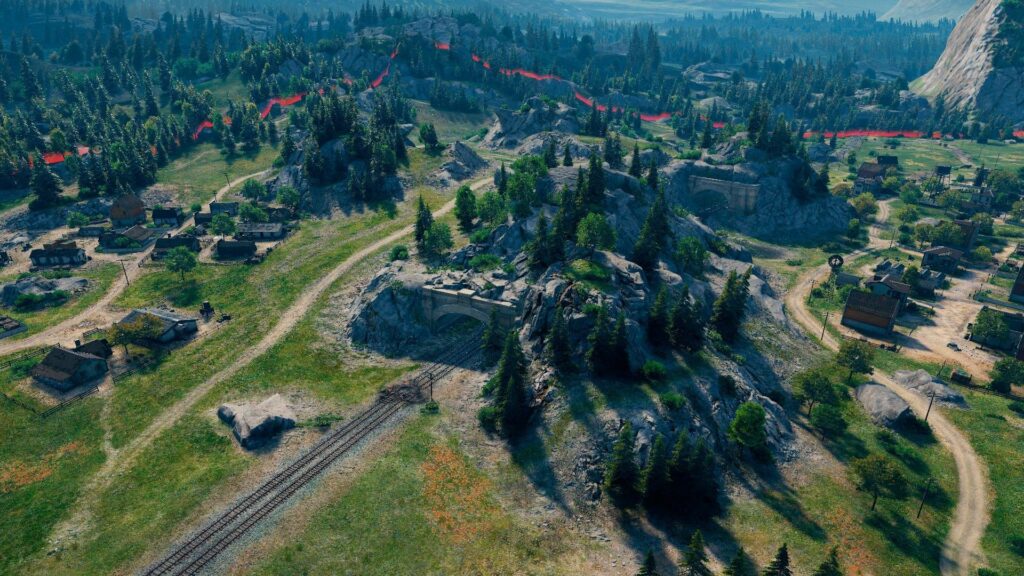
This new addition allows heavy tanks to engage at various distances and across multiple elevation levels. Additionally, the coastal area has been adjusted to offer superior positions and firing lanes for snipers targeting enemies in both the front lines and the center of the map.
AI-Powered Guidance
To combat mistakes and the lack of map knowledge among newcomers, Wargaming is deploying a new weapon: Battle Route Tips. During the 30-second countdown before the match starts, the minimap will display recommended zones for your specific tank type, based on historical data from thousands of previous battles.
This feature is available for Tiers VI through XI. However, it is disabled for light tanks to avoid encouraging “suicide scouting,” and the tips disappear as soon as the battle begins. If you find this AI assistance annoying or don’t want your minimap cluttered with “coloring book” overlays, you can disable it at any time in the settings (General -> Tips).
Conclusion
This entire patch feels like a major experiment to see how much further the gameplay of World of Tanks can be pushed. We are seeing Tier XI tank mechanics, overhauled maps, and new guidance systems all at once.
While Battle Route Tips might help newcomers grasp the basics of each class, I am personally a bit concerned about this trend of oversimplification, which could lead to matches becoming increasingly predictable.
Furthermore, I find Wargaming’s logic quite puzzling. If the goal is to provide practical advice to new players on where to position their vehicles, shouldn’t this feature be available at lower tiers, perhaps only up to Tier VIII? What use is it to a novice who has to grind through Tiers II–V, only to receive guidance much later? On the contrary, players in Tier IX–XI vehicles should already know exactly how and where to utilize their machines to their full potential.
This brings us to a provocative question: Are the new Tier XI mechanics and AI minimap tips a necessary step toward modernization, or is World of Tanks drifting too far away from its tactical roots?
Let me know in the comments if you are looking forward to the Fauteur, or if you’d rather take your chances with the unpredictable Gorilla!