Light tanks are without a doubt the most demanding class of vehicles in World of Tanks. They require perfect knowledge of maps, camouflage mechanics, and nerves of steel. At the same time, they are often the most critical link in the team. When a “heavy” fails, the team loses armor. When a “light” fails, the team loses its vision and gets sniped from a distance without ever knowing where the shots came from.
Unfortunately, many players do not understand this responsibility. They either play too passively or, conversely, unnecessarily aggressively. If you want to learn how to truly dominate the battlefield with a light tank, forget about headless driving and start thinking.
Dead Scout Spots Nothing
The biggest bad habit of beginning LT players is the so-called “suicide run.” The player rushes down the middle of the map, lights up half the enemy team, and is back in the garage within 45 seconds. The result? Maybe a few hundred assist damage, but your team plays the rest of the battle blind.
The purpose of a light tank is not to die in the first two minutes. Your value grows with time. In the endgame, when there are few eyes and lots of space, a preserved light tank with full HP is the absolute king, capable of picking apart even isolated heavy tanks.
Your tank is not built for a fair “face-to-face” fight. Even though some light tanks have decent Damage Per Minute (DPM), trading shots is suicide for you. A heavy tank loses 10 % of its durability from your hit; you might lose half of yours from his. Your role is to shoot into the sides or rear of distracted enemies and disappear before they can turn their turret toward you.
Treat your Hit Points (HP) as a rare investment that you cash in only at the end of the battle. In the final minutes, when the battlefield has thinned out and the opponent’s “eyes” are gone, the prey becomes the hunter. Full HP allows you to take a risk, “eat” one shot, and circle an isolated heavy tank or go for the artillery. But if you are a “one-shot” from the second minute, your tactical potential drops to zero because you will be afraid to cross even an open field where a random HE splash could finish you off.
Not All LT Are Created Equal
Before you head into battle, you must know what you are sitting in. Playstyle is fundamentally influenced by several factors. Besides the category (wheeled vs. tracked), it depends on how large the vehicle is and what its role is.
The first category includes classic tracked vehicles, typically represented by the Manticore, T-100 LT, or the tiny ELC EVEN 90. These masters of camouflage benefit primarily from their excellent view range, which—unlike wheeled vehicles—they can maximize while stationary using Binocular Telescope. Their domain is the so-called passive spot, where your goal is to find a strategically placed bush, stop, and literally blend in with the environment. In such a position, you become an invisible trap revealing enemy movements without the opponent having the slightest clue about you.
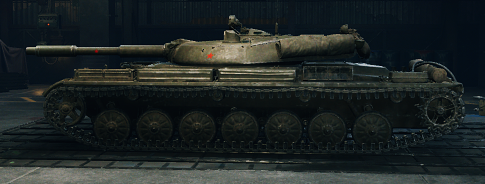
The second and completely different group consists of wheeled vehicles, represented primarily by the French line ending with the EBR 105. These vehicles are the antithesis of classic tracked lights – they have worse base view range, but they fully compensate for this lack with extreme speed and agility. Forget about sitting in a bush here, although even that isn’t impossible. Your playstyle is aggressive “active spotting.” In the case of wheeled vehicles, your only armor is speed, so you must be constantly on the move. You surf the ridgelines, peeking out for just a fraction of a second to light up targets, and immediately disappearing to safety. By doing this, you not only provide info to the team but also disrupt the enemies’ focus, forcing them to confusedly turn their turrets in your direction.
The Art of Invisibility
Being a good scout means mastering “Bush Mechanics.” A bush is your best friend, but you have to know how to use it.
If you take a position in a bush for the purpose of passive spotting, you must maintain iron discipline – do not move, and above all, do not shoot. The game mechanics are unforgiving in this regard. As soon as you pull the trigger, your camo factor drops drastically, and what’s worse, the bush in your immediate vicinity instantly loses its camouflage bonus for you (it becomes “transparent”). The consequence is fatal – you instantly light up for enemy tanks that would otherwise have no idea you were there, and your carefully chosen position is blown.
Your task is to feed information to your allies (TDs and arty) standing in the back. Your weapon is your eyes, not your gun. Shoot only when you are sure no one can spot you (e.g., double-bushing), or when it comes to self-defense or finishing off an isolated target.
The “Holy Trinity” for Scouts
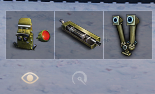
The days when just a “Camo Net” and “Binos” were enough are gone. In modern WoT, the correct equipment configuration decides success, especially since the introduction of Equipment 2.0. If you are serious about passive spotting, your absolute baseline must be the CVS (Commander’s Vision System) in the bonus slot.
This module allows you to light up camping TDs before they see you. Combine it with the Low Noise Exhaust (LNE) for better camouflage, and I personally prefer Binoculars for maximum view range. Of course, many people prefer the more versatile Coated Optics. Without this trinity, you will always be at a disadvantage against experienced light tank players.
City Combat and the “Vulture” Role
Having a plan (and a setup) ready for maps that your tank “doesn’t like” (such as Berlin, Himmelsdorf, or Ruinberg) is exactly what separates good players from average ones. On these maps, you cannot use your main trump card – camouflage and view range – so you must change the tank’s identity.
Your favorite bushes are nowhere to be found, and the corridor is full of heavy tanks. If you played your standard “bush-wanking” setup, you are essentially half a tank. On a city map, you are not the one holding the line. You are the one being a nuisance. Your tank doesn’t have the armor to stand on the front line, so you must play a Support role.
Never be the first to take a hit. Let the heavy tanks (the team’s HP pool) take the shots. Wait for the enemy to fire at your ally. The moment they are reloading, you peek out, take a shot, and immediately disappear. CVS and Optics are not very useful to you here. This is where the Second Setup (Gun Rammer + Vents + Turbo) and a radical change in playstyle come into play.
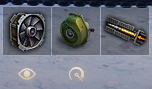
At close range, you don’t need extreme view range. In city combat (“peek-a-boo”), the most important things are reversing and acceleration. You need to peek, shoot, and reverse before anyone can turn their turret onto you. The Turbo gives you that extra second. When you finally have a chance to shoot, you need to pump out shells as fast as possible, which is why the Rammer is suitable. Vents improve not just gun handling but overall stats.
Flanking
If the main battle line stalls at a point where heavy tanks are facing each other and cannot move, your moment comes thanks to your mobility.
Use your speed to relocate to another flank or to the enemy’s rear. As soon as the heavy tanks start focusing on one direction, you appear from the side. Just one shot into the side or tracks can cause panic. The enemy starts turning their turret toward you, and your allies can dismantle them.
In the late game, when there are fewer tanks and more space, you turn into a hunter. Thanks to Vents and Turbo, you have better stats than the remaining tanks. You can afford to trade your HP (which you saved the whole game) to finish off key enemies.
Playing light tanks isn’t for everyone. It is about patience and discipline. It is a psychological game where you must resist the temptation to shoot in order to keep your team at an advantage. If you learn to survive the opening minutes and effectively use bushes, you will become the player the enemy team hates and your team loves.